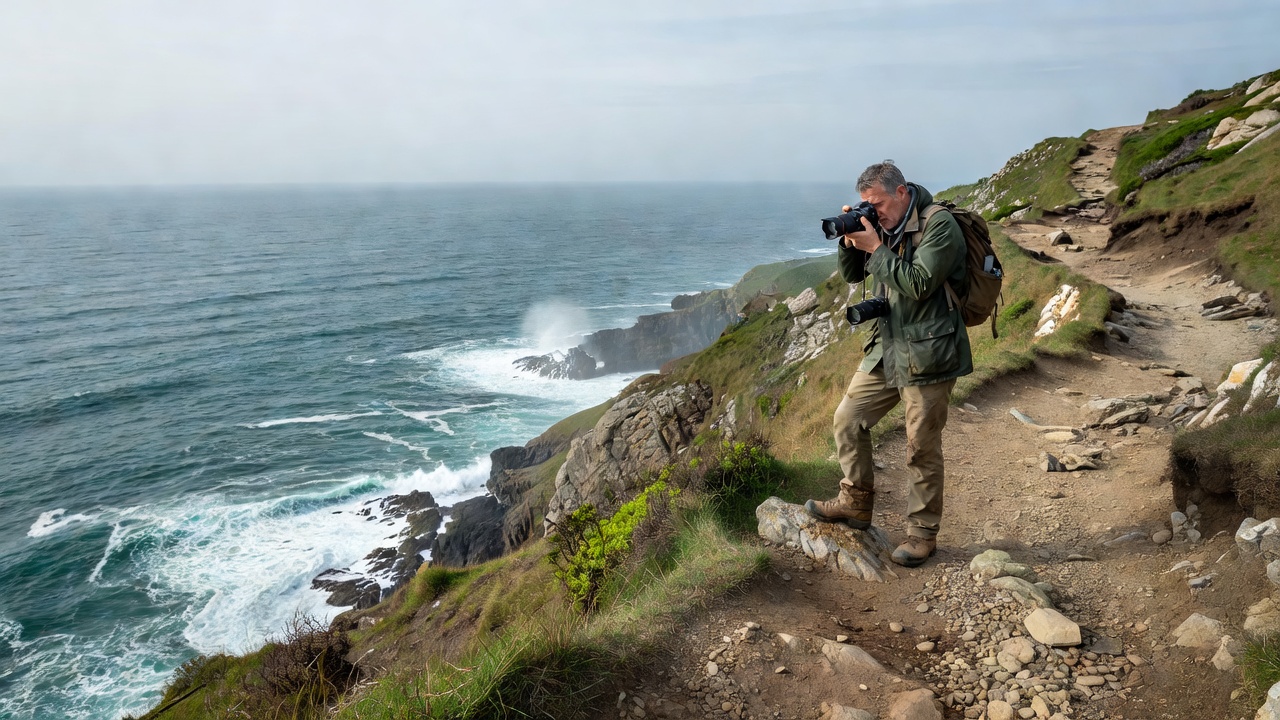
A coastline is a changing system rather than a fixed viewpoint. Tide height alters the foreground, swell changes how far waves reach, and wind affects both stability and the texture of the water. These are photographic variables, but they are first of all route-planning variables. A composition should fit within a safe visit, not determine how much risk the visit requires.
Start with a map, local access information and an appropriate marine forecast. Check tide predictions for a relevant station and understand that predicted levels do not describe every local hazard. Weather, surge, swell and the shape of the shore can change what happens at your exact position. When conditions are uncertain, choose an established landward viewpoint or postpone the shore-level plan.
Asturias: read the coast from above first
The coast of Asturias in northern Spain offers cliffs, beaches and rock formations with very different approach conditions. Use an authorised path or maintained viewpoint for an initial survey. Look at where waves break, where wet rock marks recent reach, and whether the route below has a genuinely independent exit.
For a photograph, separate the line of the headland from the foreground. A moderate telephoto lens can bring layers together without requiring a move towards the edge. Side light may describe rock texture; overcast light can support a more restrained study of tones. Neither lighting condition justifies crossing a barrier or descending an informal scramble.
Some Asturian coastal features include blowholes, locally called bufones. They are not photographic props. Keep well away from openings and exposed edges, observe restrictions, and seek local safety guidance. A dry-looking surface does not establish a safe place to stand.
The Faroe Islands: wind belongs in the plan
In the Faroe Islands, dramatic coastal relief can make a wide-angle photograph feel inevitable. Yet steep ground, rapidly changing visibility and strong wind can make the safest composition a smaller, more sheltered one. Check route-specific permissions and current local guidance; arrangements for particular walks and viewpoints can change.
Keep your tripod low and stable where using one is appropriate, but do not treat equipment stability as proof of personal safety. Avoid blocking a narrow path while waiting for a break in the clouds. Give grazing animals space, close gates when required, and respect privately managed land and any fees or guide requirements.
Alentejo and the Hebrides: different edges, similar questions
Along Portugal’s Alentejo coast, established sections of the Rota Vicentina can provide a framework for exploring coastal scenery. Verify the current official route, closures and permitted uses. Sandy ground and cliff margins are not an invitation to cut between marked sections. Protect dune vegetation and choose a firm, authorised place to pause.
In Scotland’s Outer Hebrides, beaches and machair landscapes may look open and robust while supporting sensitive vegetation, wildlife and working land. Use suitable access points, avoid driving or parking on vulnerable ground, and follow local signs. A wide beach does not mean every nearby surface can carry repeated foot traffic.
Choose a shutter speed for the story
Long exposures can smooth water and simplify a busy frame, but they also encourage attention to drift towards the camera rather than the conditions. Make a short exposure first. Decide whether the image needs visible wave structure, a suggestion of movement or a quieter surface. There is no single correct coastal shutter speed.
Keep checking behind and around you. Never chase equipment into dangerous water. If a wave reaches closer than expected, move back to a clearly safer position and reassess rather than treating the event as a useful test. Avoid stepping backwards while looking through the viewfinder.
The coastal checklist
- Access: Confirm the permitted approach and a return route that will remain usable.
- Conditions: Read tide, wind and swell information—not just a general weather icon.
- Position: Stay back from unstable edges and outside wave reach.
- Awareness: Watch changing conditions throughout the visit, including while composing.
- Alternative: Identify a sheltered, landward composition before setting out.
The most useful coastal skill is the willingness to change the photograph. A higher viewpoint, a different focal length or a frame made inland can preserve the character of the coast without asking the sea to honour your schedule.